Understanding Direct Thermal and Thermal Transfer Technologies
In industrial barcode printing and automated packaging lines, selecting between direct thermal (DT) and thermal transfer (TT) labels directly impacts operational expenses, printhead longevity, and barcode scannability throughout the supply chain. Both methods utilize thermal printheads, but their chemical and mechanical mechanisms differ fundamentally.
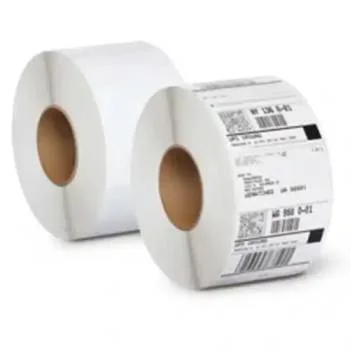
Direct thermal printing uses chemically treated, heat-sensitive facestock paper. When the heated elements of a barcode printhead contact the paper, a chemical reaction occurs in the leuco dye layer, producing an instant black image without requiring an ink ribbon. In contrast, thermal transfer printing requires a polyester ribbon coated with wax, wax-resin, or pure resin ink. The printhead melts the ink coating, transferring it under mechanical pressure directly onto the label facestock.
Durability and Environmental Resistance Comparison
The primary consideration when choosing between direct thermal and thermal transfer is the required lifecycle of the label and the environmental exposure it will encounter:
- Direct Thermal Lifespan: Typically 3 to 12 months under indoor conditions. Direct thermal facestocks remain chemically active post-printing. Prolonged exposure to ultraviolet (UV) sunlight, ambient warehouse heat exceeding 45°C, or chemical contact with plasticizers in stretch film causes background darkening and barcode degradation.
- Thermal Transfer Lifespan: 1 to 10+ years depending on facestock and ribbon formulation. Resin-anchored thermal transfer images resist extreme temperature ranges (-40°C to +150°C), outdoor UV weathering, mechanical scuffing, and industrial solvents including alcohol and oils.
Substrate Compatibility and Ribbon Chemistry
Direct thermal printing is restricted primarily to top-coated and economy paper substrates, with select synthetic thermal films available for moist environments. Thermal transfer printing supports an extensive spectrum of industrial substrates:
- Chromo Art Paper: Semi-gloss coated paper paired with standard carbon wax or resin-enhanced wax ribbons for high-contrast carton dispatch and retail tagging.
- Synthetic BOPP & Polyethylene: Tear-resistant plastic films paired with wax-resin ribbons for moisture-rich beverage and cosmetic container labeling.
- Industrial Polyester (PET): Matte white and silver metallized films paired with pure full resin ribbons for PCB tracking, electronics serial numbers, and automotive component marking.
Total Cost of Ownership: Consumables and Printhead Wear
Direct thermal printing eliminates the procurement and inventory management of thermal transfer ribbons, simplifying roll loading and reducing operator changeover times. However, direct thermal paper facestocks possess higher surface abrasiveness than the silicone backcoating of thermal ribbons. Over extended production cycles, direct thermal paper accelerates printhead friction wear, often shortening printhead operational life compared to thermal transfer printing where ribbon backcoating acts as a protective lubricant.
Application Decision Matrix
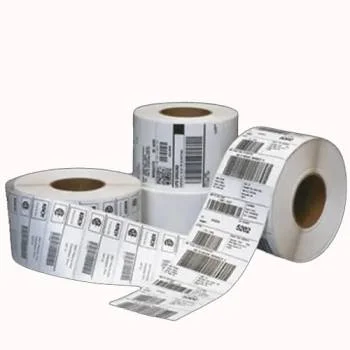
Advantech Solutions recommends direct thermal labels for short-lifecycle operations including e-commerce airway bills (AWB), courier dispatch tags, grocery weigh scales, and cross-docking logistics. Thermal transfer labels are recommended for pharmaceutical packaging, inventory asset tags, chemical drum identification, automotive parts, and long-term warehouse racking.
Frequently Asked Questions
Can direct thermal printers use thermal transfer ribbons?
No. Dedicated direct thermal desktop printers lack ribbon supply spindles, take-up motors, and ribbon sensors. Dual-mode thermal transfer printers can operate in both direct thermal and thermal transfer modes.
Why do direct thermal labels turn black when scratched?
Frictional heat created by fingernail pressure or mechanical scraping triggers the leuco dye chemical reaction in the top layer, creating an instant black line.
What ribbon is required for chromo barcode labels?
Chromo paper labels require a standard wax ribbon or a resin-enhanced wax ribbon for optimal edge acuity and smear resistance at speeds up to 10 inches per second.